It has been just eight days since I launched my new Obsidian.md plugin: K-Plex.
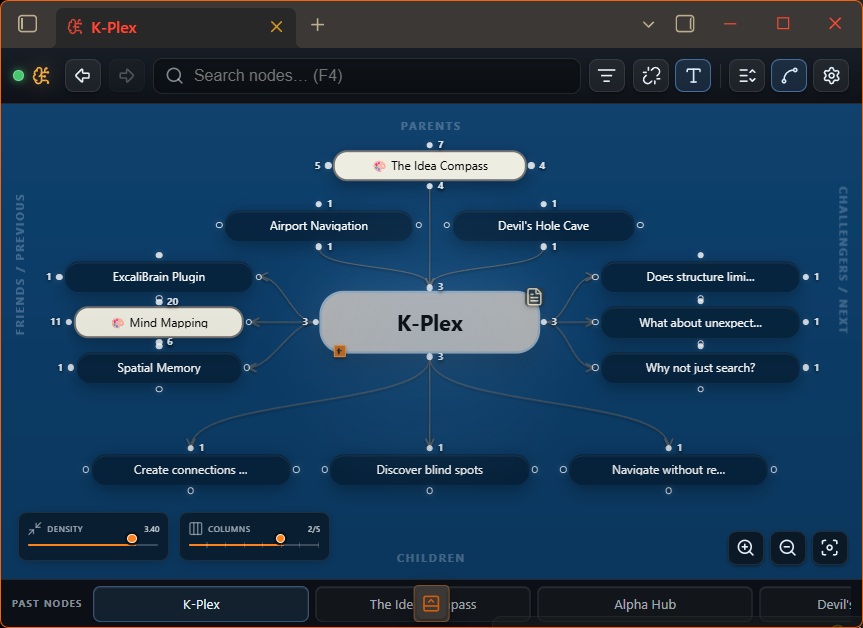
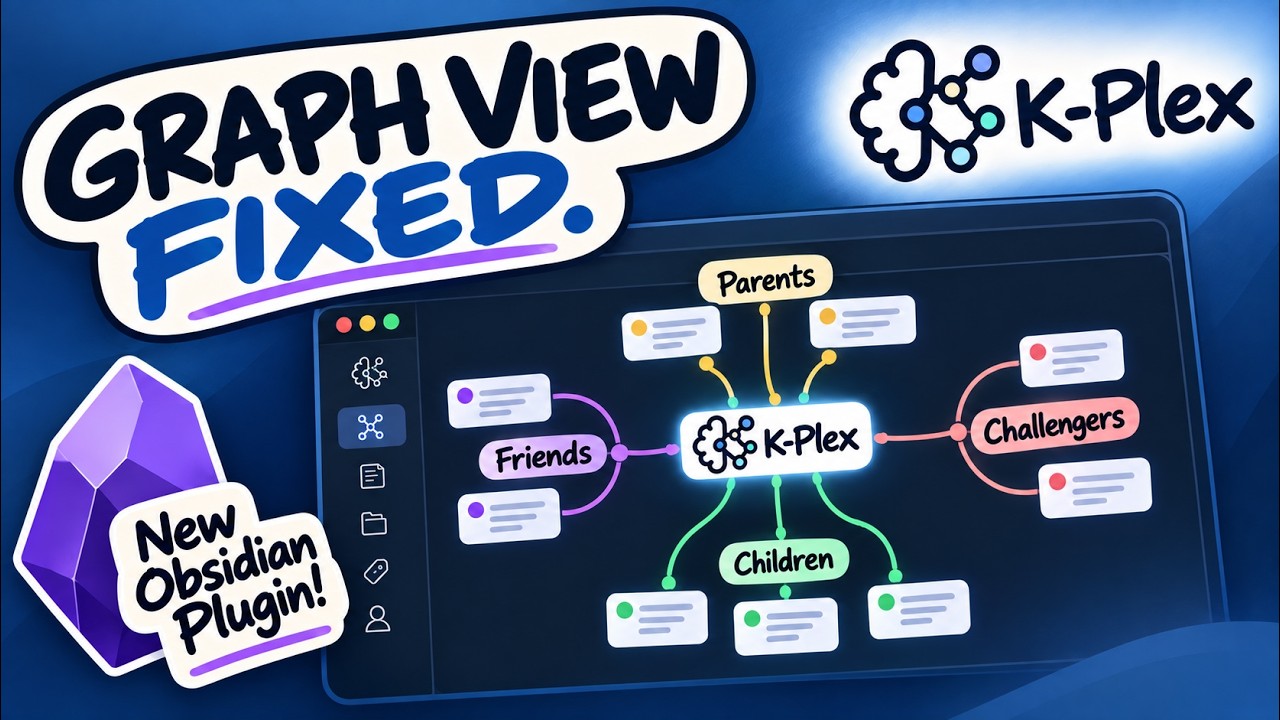
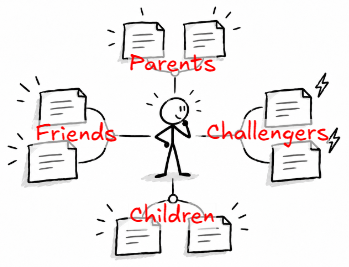
K-Plex is a structured knowledge graph visualizer for your Obsidian Vault. Instead of showing your notes as a free-floating cloud of connections, it gives relationships a predictable spatial structure: parents above, children below, friends to the left, and challengers to the right.
If you haven't seen K-Plex yet, here is the short introduction:
Over the past week I have received an incredible amount of positive energy around K-Plex.
Thank you.
There is also one question I have seen in different forms in the YouTube comments:
Why does it matter that the graph has a fixed structure?
Why should parents always be above, children below, friends on one side, challengers on the other? Why not simply show all the connections and let the graph arrange itself?
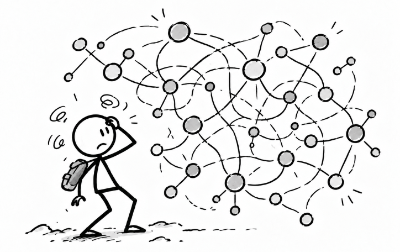
I think the best answer involves a cave.
When I was a teenager, my best friend and I spent a lot of time exploring caves around Budapest.
One of our favorites was the Devil's Hole in Solymár.
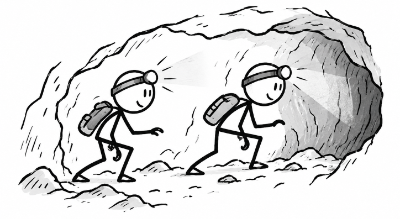
One evening we crawled through a narrow passage into a large chamber. We rested for a while and then turned around to leave.
Suddenly there were five exits.
That was strange.
There had only been one entrance when we came in.
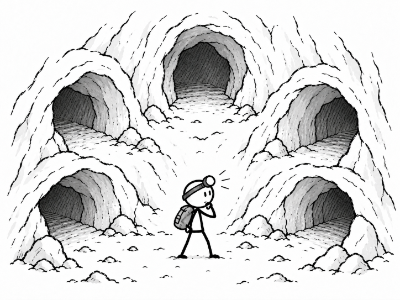
Of course, nothing had changed.
We had changed direction.
We had been so focused on what was ahead that we had never stopped to look back and memorize what the room would look like from the other direction.
We eventually found our way out, but I learned something that night.
From then on, whenever I entered a chamber, I stopped and looked back.
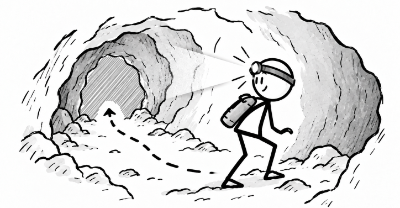
I was building a map for my future self.
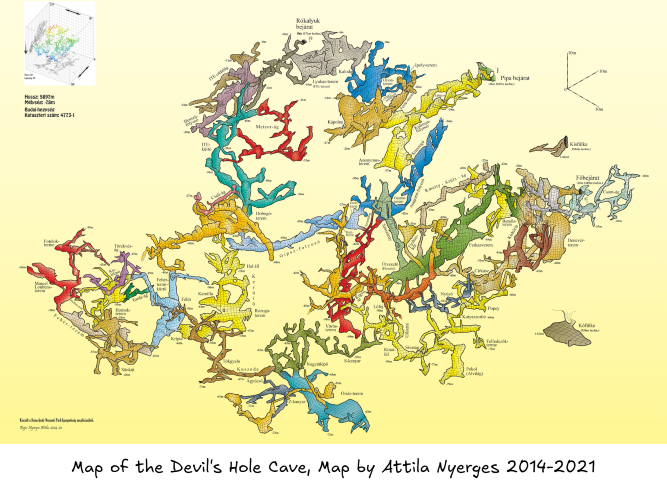
I think our notes work much the same way.
Connections alone are not enough.
We need orientation.
For many years I traveled almost every week. The first time I arrived at an unfamiliar airport, I had to read every sign.
Baggage claim? Exit? Taxi? Train?

Two weeks later, arriving at the same airport, I could almost run through it.

Nothing had become objectively simpler.
I had a map in my head.
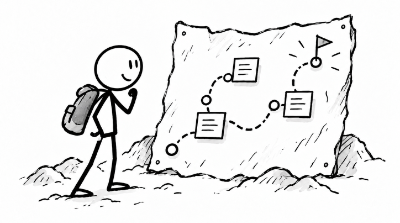
This is one of the ideas behind K-Plex.
Parents are above you. Children are below. Supporting and related thoughts live to one side. Challenging thoughts can live on the other.
The relationships have meaning, and their position has meaning.
When you move from note to note, the contents change, but the grammar of the space remains the same.
A normal graph can show you that two things are connected.
A map tells you where you are.
And humans are remarkably good spatial navigators.
We remember where something was on a page. We remember which way we turned. We recognize a familiar street corner before we can name the street.
That is the superpower I want K-Plex to tap into.
I want your vault to gradually become a landscape you know.
Not just a database you search.
Not just a cloud of dots.
A place.
If you want a more hands-on look at how K-Plex works, I have also published a beginner's guide, and we will be discussing K-Plex at the next Sketch Your Mind Community monthly call this coming weekend.
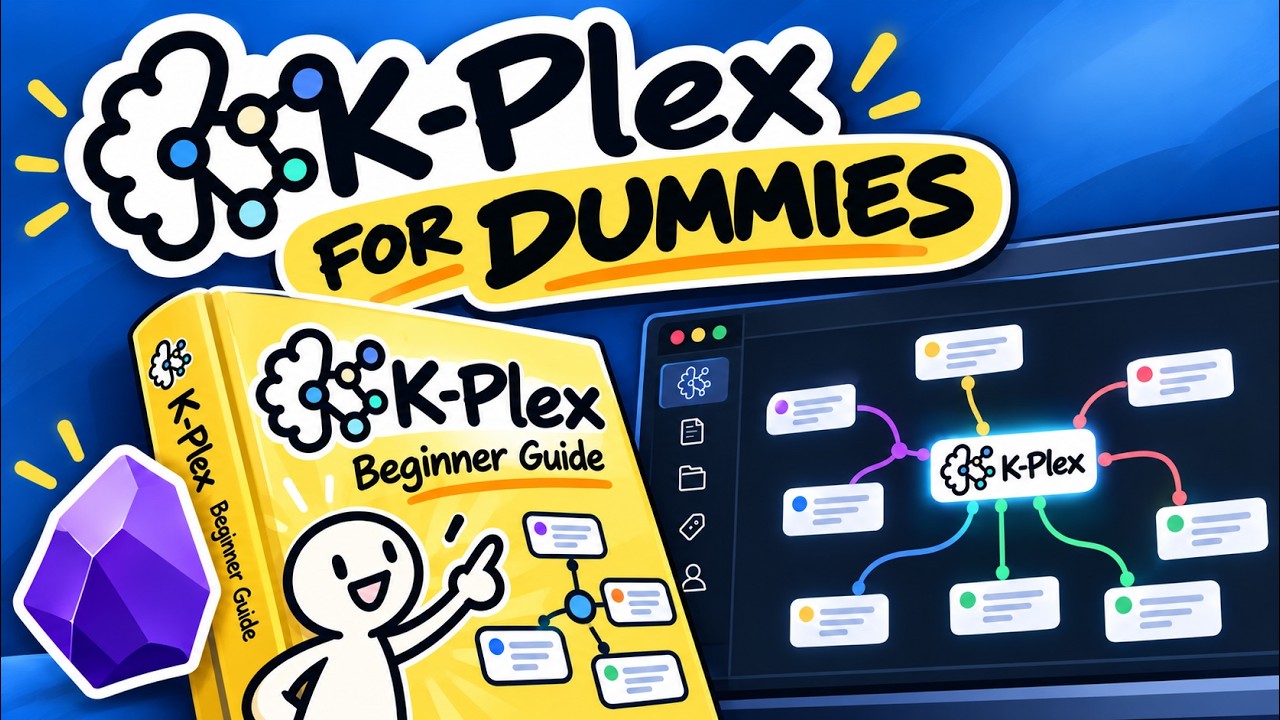
K-Plex is currently my labor of love. I started building it only nine days ago, and my list of ideas for where I want to take it is considerably longer than the list of things already implemented.
So...
Watch this space.
But there is another part of the K-Plex story that I think is worth talking about.
How am I building this so quickly?
A few weeks ago I released StoryOS.
StoryOS started as an experiment: could I use today's AI tools to help me create a full-length fiction book?
The answer generated some controversy.
Several people essentially said:
"If you didn't write the book, why would I want to read it?"
I think that is a completely fair position.
I am not trying to convince anyone that an AI-assisted novel is somehow more worthy of being read.
And I am definitely not positioning myself as a writing teacher.
That was never the most interesting part of StoryOS for me.
The interesting part was the system I had to build around the book.
Instead of sitting in a chat window and repeatedly asking an AI to write things, I treated the story like a serious software project.
I broke the problem into components. Characters. Locations. Scenes. Timelines. Research. Story facts. Reader knowledge. Character knowledge.
I created specialized agents for different jobs.
I created skills that captured repeatable expertise.
I used Git to track changes.
I built validation and review loops.
I automated repeatable work.
And I kept the human in the middle making the decisions.
The AI became an orchestra. I remained the conductor.
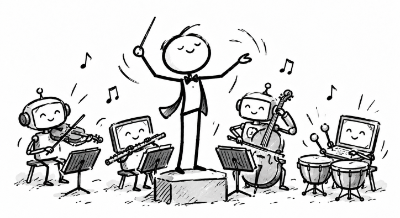
And that experience changed the way I work with AI.
At my day job, I have since used the same principles to build a self-learning knowledge portal.
And now I am using exactly the same thinking to build K-Plex.
In fact, software and a book are surprisingly similar.
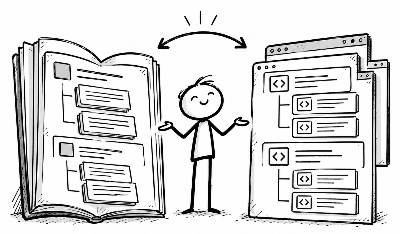
A book has chapters, scenes and paragraphs.
Software has modules, functions and code.
Both become a mess surprisingly quickly if you lose track of structure, dependencies, decisions and change.
And in both cases, AI makes that problem bigger, not smaller, if all you know how to do is prompt.
AI can generate an extraordinary amount of stuff very quickly.
The difficult part is building a system in which that stuff remains coherent, inspectable, testable and under your control.
That is what StoryOS is really about.
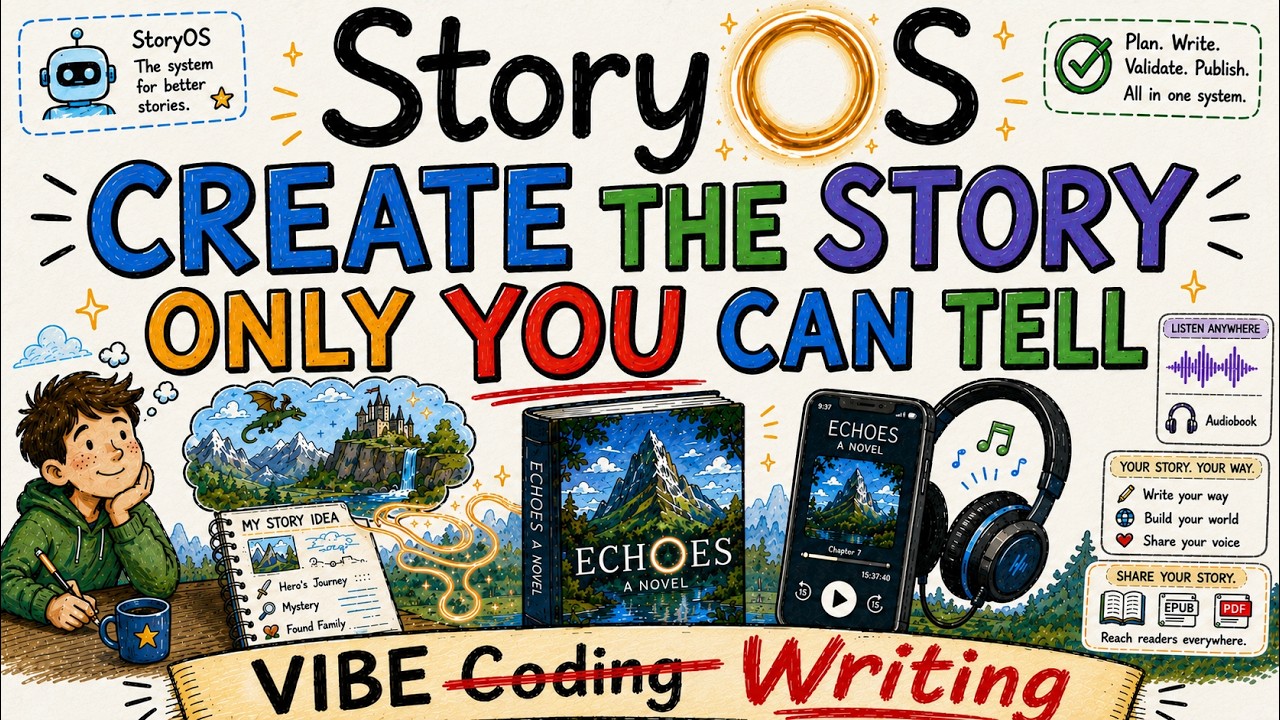
It happens to use writing a book as the playground.
And I actually think that is a wonderful playground.
Stories are complicated.
They involve people, places, time, causality, facts, emotion, structure, consistency and lots and lots of interconnected decisions.
They are difficult enough to require serious agentic workflows—but bounded enough that in eight weeks you can build something real.
One participant recently told me she was interested in turning her Obsidian notes into stories.
I love that idea.
We spend so much time collecting knowledge. What happens when we start weaving some of that knowledge into narratives?
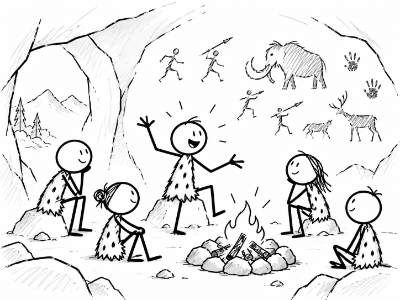
Stories are one of the oldest tools humans have for making sense of complexity and carrying knowledge forward.
Suddenly StoryOS, K-Plex and Sketch Your Mind don't feel like completely different projects to me.
They are all exploring the same question:
How can we build better structures around our thinking, so our tools amplify our imagination instead of constraining it?
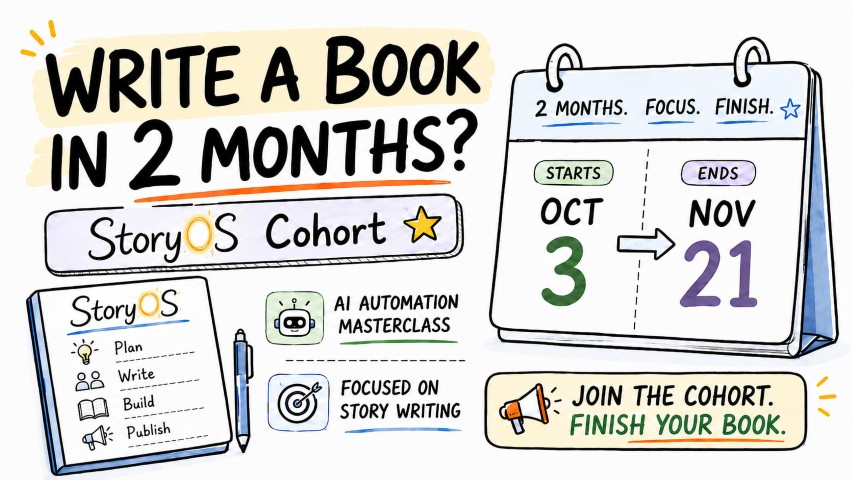
This Saturday, October 3, the first StoryOS cohort begins.
For eight weeks we are going to get very hands-on.
This is not a writing masterclass.
I am not going to teach you how to write.
I am going to teach you how I work with AI agents, structured project knowledge, skills, workflows, Git, automation, validation and iterative development.
We will use creating a book as our shared challenge, but you do not need to write a book to join: you do need a real project to learn and struggle through, and a book simply happens to be a wonderfully fun and challenging one.
If you have been playing with ChatGPT, Claude or other AI tools and feel there must be something beyond prompting...
There is.
If you want to understand the kind of workflow that allowed me to build StoryOS—and is now allowing me to move this quickly with K-Plex...
That is what I want to teach you.
The cohort starts this Saturday.
Bring the story you have always wanted to create.
I will bring StoryOS, the workflows, the agents, the mistakes I made along the way, and everything I have learned about putting today's AI tools to serious work.
Let's see what you can build in eight weeks.
Life is beautiful.
–Zsolt
